
Mortgage Overpayment Calculator
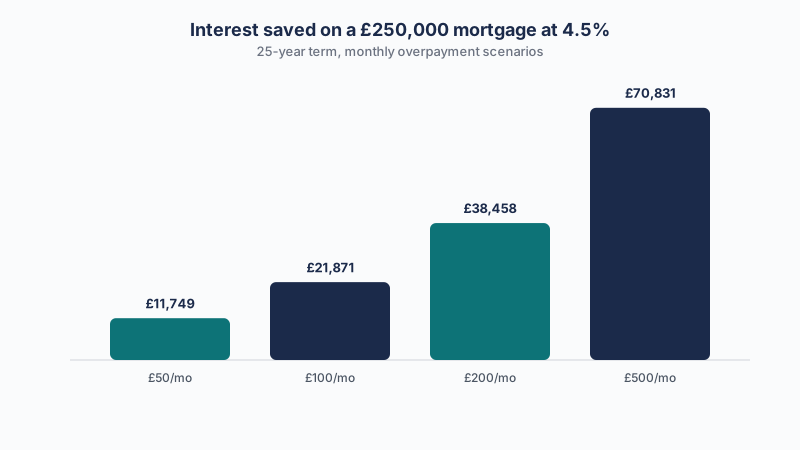
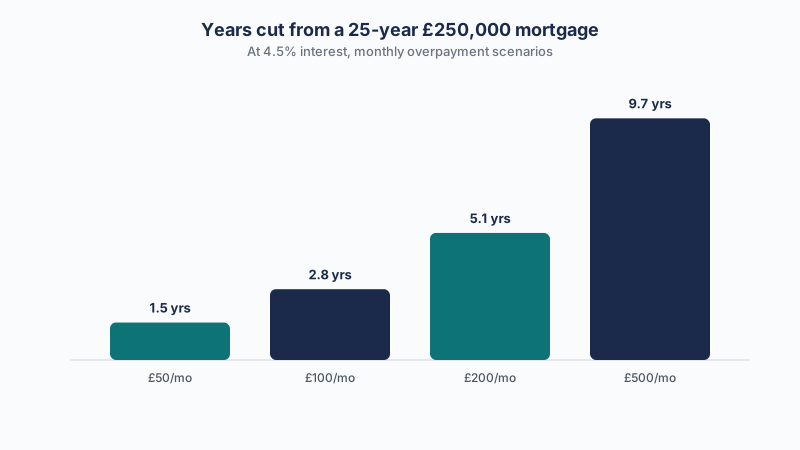
Making a £200 monthly overpayment on a £250,000 mortgage at 4.5% over 25 years saves approximately £28,000 in total interest and pays off your mortgage 4 years and 3 months early. Use our free calculator below to see your exact savings based on your balance, rate, and overpayment amount.
Calculation method: Amortised loan repayment formula. This tool runs a model on the figures you enter, so there is no official rate table behind the result.

Calculator
Your current remaining mortgage balance.
Your current mortgage interest rate, e.g. 4.5 for 4.5%.
How many years are left on your mortgage.
Extra amount above your normal payment each month.
An immediate single overpayment, applied at the start.
Enter your mortgage details to calculate savings
See exactly how much interest you save by overpaying your mortgage each month.
What this calculation assumes
Monthly payment is the standard annuity formula, P x (r(1+r)^n) / ((1+r)^n - 1), where r is the interest rate you enter divided by twelve and n is the term in months. Interest is charged on the reducing balance each month.
- The interest rate you enter is fixed for the whole term
- Payments are monthly, equal, and made on time
- Fees, insurance and any early repayment charge are excluded unless you enter them
- This is not a quote and no lender's actual pricing is used
- Overpayments are applied to capital immediately and no early repayment charge is deducted unless you enter one
Stay updated
Get UK Finance Tips Weekly
Tax changes, HMRC rate updates, and money-saving guides. No spam - unsubscribe any time.
How Mortgage Overpayment Calculator Works
Every mortgage payment is split between interest (cost of borrowing) and principal (reducing your debt). In the early years, most of your payment goes to interest - meaning overpayments made now have a disproportionately large impact on your total interest cost.
How the Calculator Works
We run two separate amortization schedules side by side - one with your standard payment only, and one with your chosen overpayment added each month and/or a lump sum deducted on day one. For each month we calculate:
- Interest due: Remaining balance × (annual rate ÷ 12)
- Principal paid: Payment − Interest due
- New balance: Previous balance − Principal paid
Any extra payment goes directly to reducing the principal, which immediately lowers every future interest charge - creating a compounding saving effect.
Worked Example: £250,000 at 4.5% over 25 years
| Scenario | Monthly payment | Total interest | Payoff date | Interest saved |
|---|---|---|---|---|
| No overpayment | £1,390 | £167,042 | Mar 2050 | - |
| £200/mo overpayment | £1,590 | £138,823 | Dec 2045 | £28,219 saved |
| £500/mo overpayment | £1,890 | £102,104 | Sep 2040 | £64,938 saved |
The 10% Overpayment Rule
Most mortgage lenders in the UK allow you to overpay up to 10% of your outstanding balance per year without incurring an Early Repayment Charge (ERC). For a £250,000 mortgage that means up to £25,000 per year, or roughly £2,083/month. Always check your mortgage terms before overpaying.
Lump Sum vs Monthly Overpayments
A lump sum overpayment reduces your balance immediately, giving a slightly larger total saving than the equivalent spread over months because interest is calculated daily or monthly on the remaining balance. However, consistent monthly overpayments are often more practical and build a disciplined savings habit.
Frequently Asked Questions
The saving depends on your balance, interest rate and how much you overpay. As a rough guide: on a £200,000 mortgage at 4.5% with 20 years remaining, a £200/month overpayment saves around £18,000 in interest and pays off the mortgage 3 years earlier. Larger balances and higher interest rates amplify the benefit significantly. Use the calculator above for your exact figures.
A lump sum overpayment saves marginally more interest because it reduces your balance immediately (interest is calculated on the daily/monthly outstanding balance). However, for most borrowers the difference is small, and consistent monthly overpayments are more practical. The most important factor is making overpayments as early as possible in your mortgage term, when the interest savings compound most powerfully.
Most UK mortgage lenders allow overpayments of up to 10% of your outstanding balance per year without triggering an Early Repayment Charge (ERC). For example, on a £250,000 mortgage you could overpay up to £25,000 per year (about £2,083/month) penalty-free. Some lenders apply the 10% limit to the original mortgage balance rather than the current balance. Always check your specific mortgage terms, especially if you're on a fixed-rate deal.
This depends on your mortgage interest rate versus the savings rate available. If your mortgage rate is 4.5% and you can get 5% in a cash ISA, saving wins slightly on numbers - plus ISA interest is tax-free. However, mortgage overpayments offer a guaranteed, risk-free return equal to your mortgage rate, whereas savings rates can change. Many financial advisers recommend a split approach: max your ISA allowance then overpay any remainder.
Yes - if you're on a fixed-rate, tracker, or discount mortgage during a special-rate period, you may face Early Repayment Charges (ERCs) if you overpay beyond your lender's allowed limit (usually 10% per year). ERCs are typically 1% to 5% of the overpaid amount. On a standard variable rate (SVR) mortgage, there are usually no ERCs and you can overpay unlimited amounts. Always check your mortgage terms or call your lender before making a significant overpayment.
Related Calculators
View allRelated Guides
Mortgage Overpayment: Is It Worth It in 2026?
With savings rates rising and mortgage rates still elevated, we compare the real-terms benefit of overpaying your mortgage versus keeping cash in an ISA - including tax implications.
Read guideHow to Remortgage in 2026: Step-by-Step Guide
Everything you need to know about remortgaging - when to start, how to compare deals, broker vs direct, and how overpayments affect your new LTV band.
Read guideUK House Prices 2026: What's Happening to the Market?
Halifax and Nationwide data analysed: where prices are rising, where they're falling, and what it means for mortgage borrowers and overpayment strategy.
Read guideUK Mortgage Overpayment Strategy Guide 2025
A 30-page PDF covering overpayment strategies, ERC avoidance, offset mortgages, ISA vs overpayment analysis with worked examples, and a printable overpayment tracker spreadsheet.
Was this useful?
Sources and method
This calculator has no external rate table behind it. The result comes from the figures you enter and the model described in our methodology.
Method: Amortised loan repayment formula.
Spotted a figure that looks wrong? Report a correction and we will check it against the source above.
Further reading
Background references used while writing this page. The sources behind the calculated figures are listed above.
Disclaimer: This calculator provides estimates based on standard HMRC rates for 2026/27. Results may vary based on individual circumstances. This is not financial advice. Always consult a qualified accountant or CIMA-qualified financial adviser for personal tax matters.