
Rent Affordability Calculator UK 2026
Most UK letting agents require gross income of at least 30 times the monthly rent, so on £30,000 you can typically rent up to £1,000 a month. This calculator shows the maximum rent for referencing, a comfortable budget figure, and whether a property is affordable. Enter gross annual income below.
Calculation method: Affordability multiples and ratios. This tool runs a model on the figures you enter, so there is no official rate table behind the result.

Calculator
Your salary before tax and National Insurance. For joint tenancies, enter combined income.
Enter a specific property rent to test whether you pass referencing.
Used to estimate your take-home pay. Referencing uses gross income.
Results
Your rent affordability
Maximum rent (30x rule)
Comfortable budget: £750 per month
- Comfortable rent (30% of income)£750 per month
- Estimated net monthly pay£2,093
What this calculation assumes
Results apply an income multiple or a share-of-income ratio to the figures you enter. These are widely used rules of thumb for orientation; a lender or landlord runs its own affordability assessment.
- The multiple or ratio is a general convention, not any particular lender's policy
- Credit history, committed expenditure and stress-rate testing are not modelled
UK rent affordability at a glance:
- The 30x rule: your gross annual income should be at least 30 times the monthly rent
- On £30,000 you can rent up to £1,000 a month under this rule
- Comfortable rent is usually no more than 30 percent of your gross income
- The 30x rule allows up to 40 percent of gross income, which passes referencing but is tighter
- Guarantors typically need to earn 36 times the monthly rent
Stay updated
Get UK Finance Tips Weekly
Tax changes, HMRC rate updates, and money-saving guides. No spam - unsubscribe any time.
How much rent can I afford?
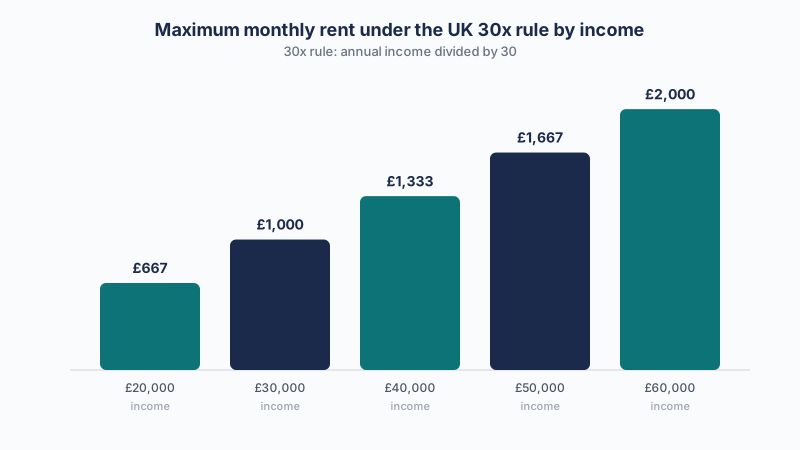
The standard UK guide is the 30x rule: your gross annual income should be at least 30 times the monthly rent, so your maximum rent is your annual income divided by 30. On a £30,000 salary that is £1,000 a month, on £45,000 it is £1,500 a month, and on £20,000 it is about £667 a month. This is the figure most letting agents and referencing companies use to decide whether to accept you. It is worth knowing that this maximum works out at 40 percent of your gross monthly income, which is on the higher side, so the rent you can pass referencing for is not always the rent that is comfortable to live with.
What rent is actually comfortable?
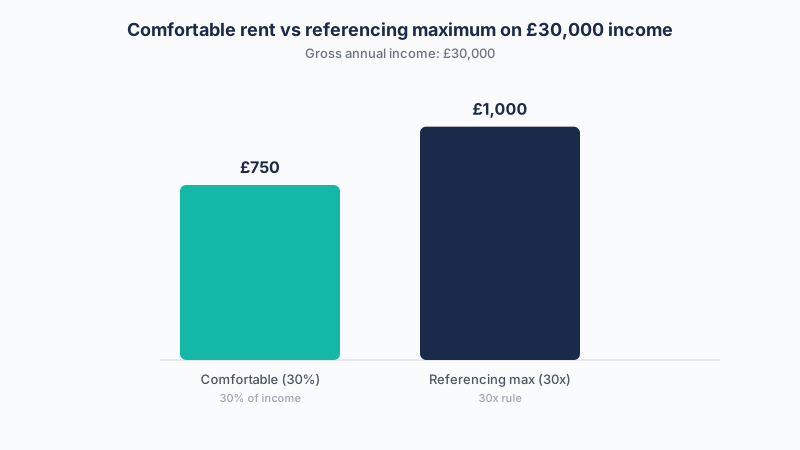
A widely used budgeting guideline is to keep your rent at or below 30 percent of your gross income, which on a £30,000 salary is about £750 a month. Between 30 and 40 percent of income your budget gets tighter but is still manageable, and above 40 percent you are over the standard 30x referencing limit and likely to feel real financial strain. The calculator shows both numbers: the referencing maximum, which is the most an agent will usually accept, and the comfortable level, which leaves more room for bills, savings and unexpected costs.
Can I afford a specific rent?
To check a specific property, compare its monthly rent against your income. If the rent is no more than your annual income divided by 30, you meet the standard referencing rule. For example, to rent a £1,200 a month flat you would usually need a gross annual income of at least £36,000, because £1,200 multiplied by 30 is £36,000. Enter the rent into the calculator and it will tell you whether you pass the 30x rule, what percentage of your income it uses, and how much a guarantor would need to earn if you fall short.
Do letting agents use gross or net income?
Letting agents use your gross income, which is your salary before tax, National Insurance and pension are taken off, when they apply the 30x rule. This is why the calculator asks for your gross annual income for the main test. Your take-home pay matters too for day to day budgeting, which is why the calculator also estimates your net monthly pay and shows your rent as a share of it, but the pass or fail referencing decision is based on gross income.
What income do letting agents require?
Most UK letting agents and referencing providers require an annual income of at least 30 times the monthly rent. Some agents in competitive markets such as London may accept 27 times or even 24 times, while stricter landlords use 35 or 40 times for extra security. If you are self employed you will usually need to provide two to three years of accounts or SA302 tax calculations rather than payslips, and the same 30x income test is then applied to your declared income.
What if my income is too low? Using a guarantor
If your income does not meet the 30x rule, most landlords will accept a guarantor, which is someone who agrees to cover the rent if you cannot. A guarantor usually needs to earn at least 36 times the monthly rent a year, so for a £1,000 a month property the guarantor would need an annual income of around £36,000. Other options some landlords accept include paying several months of rent in advance, or renting a cheaper property or a room in a shared house, where your share of the rent is assessed against your own income.
How is affordability worked out for couples and sharers?
For a joint tenancy, where two or more people are named on the same agreement and jointly responsible for the rent, agents usually add the incomes together and apply the 30x rule to the combined total. For a house share where each person has their own room and is responsible only for their share, each tenant's share of the rent is assessed separately against their own income. If you are renting as a couple or sharers, enter your combined gross income into the calculator for a joint tenancy, or just your own income and your share of the rent for a house share.
Plan the rest of your move
Knowing your rent budget is the first step. To see your take-home pay in detail, use the salary calculator, and to understand the tax and National Insurance coming out of your income, use the income tax calculator. If you are comparing rental properties as a landlord, the rental yield calculator can help you assess returns.
Frequently Asked Questions
Under the standard UK 30x rule, your maximum rent is your gross annual income divided by 30. On a £30,000 salary that is about £1,000 a month, on £45,000 it is £1,500 a month, and on £20,000 it is about £667 a month. For comfort, many people aim lower, at around 30 percent of income.
The 30x rule means your gross annual income should be at least 30 times the monthly rent. So for a £1,000 a month property you would need an income of at least £30,000, because £1,000 multiplied by 30 is £30,000. It is the most common affordability test used by UK letting agents.
To rent a £1,200 a month property under the 30x rule, you would usually need a gross annual income of at least £36,000, because £1,200 multiplied by 30 is £36,000. If your income is lower, a guarantor earning around £43,200 a year, which is 36 times the rent, may be accepted instead.
Letting agents use your gross income, before tax and National Insurance, when they apply the 30x rule. Your net take-home pay is useful for working out what is comfortable day to day, but the referencing decision is based on gross income.
If you do not meet the 30x rule, most landlords accept a guarantor who earns at least 36 times the monthly rent a year. Other options include paying rent in advance, choosing a cheaper property, or renting a room in a shared house where only your share of the rent is assessed against your income.
A guarantor usually needs to earn at least 36 times the monthly rent a year. For a £1,000 a month property that is an annual income of about £36,000, and for a £1,500 a month property it is about £54,000.
A common guideline is to keep rent at or below 30 percent of your gross income for comfort. The 30x rule used by letting agents actually allows up to 40 percent of gross income, so you can often pass referencing for a higher rent than is comfortable to live with long term.
For a joint tenancy, agents usually add both incomes together and apply the 30x rule to the combined total. For a house share where each person is responsible only for their own room, each tenant's share of the rent is assessed against their own income.
Was this useful?
Sources and method
This calculator has no external rate table behind it. The result comes from the figures you enter and the model described in our methodology.
Method: Affordability multiples and ratios.
Spotted a figure that looks wrong? Report a correction and we will check it against the source above.
Further reading
Background references used while writing this page. The sources behind the calculated figures are listed above.
Disclaimer: This calculator provides estimates based on standard HMRC rates for 2026/27. Results may vary based on individual circumstances. This is not financial advice. Always consult a qualified accountant or CIMA-qualified financial adviser for personal tax matters.