
NHS Band 2 Salary and Take-Home Pay 2026/27
An NHS Band 2 employee in England earns £25,272 a year in 2026/27, and takes home about £1,700 a month after income tax, National Insurance and the NHS pension. Band 2 covers healthcare assistants, support workers, porters, domestics and other frontline support roles. These are the confirmed 2026/27 Agenda for Change rates, which include the 3.3 percent pay award that took effect on 1 April 2026.
Source: NHS Employers AfC pay scales. Source checked on .

Band 2 at a glance, England 2026/27:
- Salary: £25,272 a year (single rate)
- Hourly rate: about £12.92 an hour
- Take-home pay: about £1,700 a month
- Pension tier: 6.5 percent
- Pay points: 1, with no progression within the band
Calculate Band 2 take-home pay - choose nation, pay point, hours, pension and student loan on the NHS pay calculator.
Pay points and modelled take-home
| Pay point | Annual gross | Monthly gross | Hourly (est.) | Take-home / mo |
|---|---|---|---|---|
| Point 1 | £25,272 | £2,106 | £12.91 | £1,700 |
Hourly estimate = annual gross ÷ 1,957.5 (52.2 × 37.5 hours). Sources: NHS Employers AfC pay scales 2026/27; take-home from the same engine as the NHS pay calculator.
Modelled take-home assumes NHS pension membership, England income tax and National Insurance for 2026/27, a standard tax code, no student loan, no High Cost Area Supplement, and 37.5 hours a week full-time (1,957.5 annualised hours at 52.2 × 37.5). Part-time figures scale basic pay by WTE. Progression between pay points depends on Agenda for Change rules and a satisfactory appraisal, it is not an automatic award for every member of staff.
Full-time and 0.6 WTE
Same Band 2 pay point 1 (£25,272 full-time basic), England 2026/27. Full-time uses 37.5 hours a week; 0.6 WTE uses 22.5 hours (0.6 × full-time). Both assume NHS pension membership, no student loan and no HCAS.
| Scenario | Hours / wk | Gross / yr | Pension | Tax + NI | Take-home / mo |
|---|---|---|---|---|---|
| Full-time | 37.5 | £25,272 | £1,643 (6.5%) | £3,228 | £1,700 |
| 0.6 WTE | 22.5 | £15,163 | £986 (6.5%) | £529 | £1,137 |
Net pay changes with pension membership (and the cliff-edge tier on whole pensionable pay), income tax and National Insurance, student loans, High Cost Area Supplement and contracted hours. A 0.6 WTE contract is not always 60 percent of full-time take-home, because personal allowance and tier thresholds do not scale the same way as gross pay. In Scotland the full-time week is 36 hours in 2026/27 (1,879.2 annualised hours), so hourly estimates and WTE hours differ from England even when the cash salary table looks similar. Use the NHS pay calculator for other nations, loans or HCAS.
What is the Band 2 take-home pay each month?
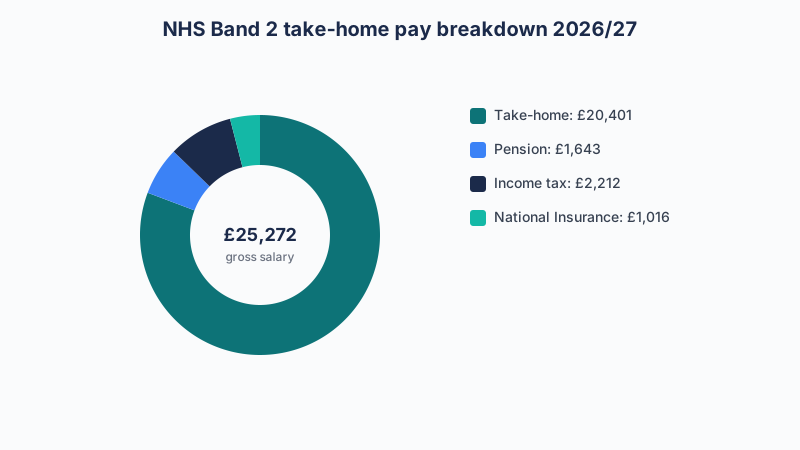
A Band 2 employee on the £25,272 salary takes home about £1,700 a month in England, once income tax, National Insurance and the 6.5 percent pension contribution are deducted. Over a year that is take-home of about £20,401, after roughly £2,212 in income tax, £1,016 in National Insurance and £1,643 in pension. All of Band 2 is taxed at the basic 20 percent rate. These figures assume a standard tax code, no student loan and full-time hours. If you have a student loan, work part time, or receive London weighting, use the NHS pay calculator for an exact figure.
Is Band 2 above the minimum wage?
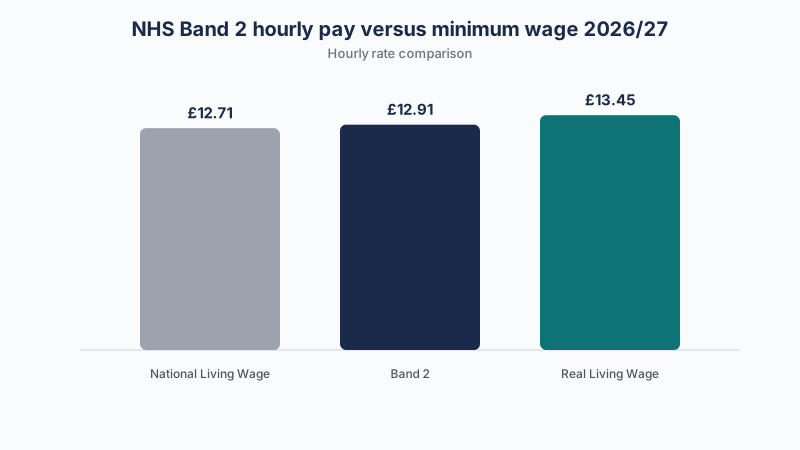
Band 2 pay of about £12.92 an hour is only 21 pence an hour above the National Living Wage, which rose to £12.71 an hour on 1 April 2026 for workers aged 21 and over. Over a full-time year that is roughly £400 more than someone earning the legal minimum. It also means Band 2 sits below the voluntary Real Living Wage of £13.45 an hour, so an NHS Band 2 worker earns less per hour than the rate the Living Wage Foundation calculates people need to get by. This is why unions such as UNISON repeatedly raise Band 2 pay, and why some trusts have reviewed whether certain Band 2 roles should be regraded to Band 3.
Does Band 2 have pay progression?
Band 2 is a single rate with no pay progression within the band. Unlike every higher band, which has two or three pay points you move up over time, a Band 2 employee stays on the same £25,272 salary regardless of length of service. Your pay only increases through the annual national pay award, or by moving up to Band 3, which does have progression. This lack of in-band progression is one of the main reasons Band 2 staff look to move up relatively quickly.
What is the Band 2 hourly rate?
The Band 2 hourly rate in 2026/27 is about £12.92 an hour, based on the standard NHS full-time week of 37.5 hours. The hourly rate is worked out by dividing the annual salary by 1,957.5, which is 52.2 weeks multiplied by 37.5 hours. In Scotland the standard week is 36 hours in 2026/27, so the hourly rate uses 1,879.2 annualised hours and is not a copy of the England figure. Band 2 clinical staff who work shifts also receive unsocial hours enhancements on top of basic pay, which for staff regularly working nights and weekends can lift effective earnings well above the basic rate.
How much is Band 2 pay in London?
A Band 2 employee in inner London receives a High Cost Area Supplement of 20 percent of basic salary, subject to a minimum of £5,794. On the £25,272 salary the 20 percent figure is £5,054, which is below the floor, so the £5,794 minimum applies, taking pay to about £31,066 before deductions. Outer London pays 15 percent and the fringe pays 5 percent, each with their own caps. London weighting is pensionable and taxable, and the calculator accounts for it when you select a London zone.
What is the difference between Band 2 and Band 3?
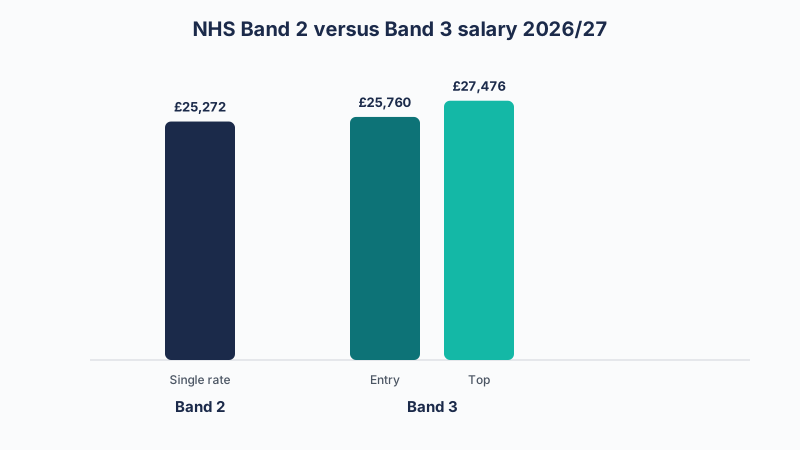
Band 3 pays more than Band 2 and, importantly, has room to grow. Band 2 is a flat £25,272, while Band 3 starts at £25,760 and rises to £27,476 across two pay points. So a move up to Band 3 is only about £488 more at the entry point, but it also unlocks progression that Band 2 does not have, taking you to £27,476 over time. Band 3 roles such as clinical support workers carry more responsibility and usually require additional training beyond the Band 2 starting point.
Who works at Band 2?
Band 2 is the entry grade for frontline support roles across the NHS. Typical Band 2 roles include healthcare assistants, healthcare support workers, porters, domestic and cleaning staff, catering assistants, receptionists, ward clerks, security staff and drivers. These roles keep wards, clinics and hospitals running, and for many staff Band 2 is the first step into an NHS career.
How do I move from Band 2 to Band 3, and how much more is it?
Moving from Band 2 to Band 3 means taking on a role with more responsibility, often as a senior healthcare assistant or clinical support worker, usually after additional training or experience. Band 3 starts at £25,760, about £488 more than Band 2 to begin with, and rises to £27,476, whereas Band 2 stays flat at £25,272. Because Band 3 has progression and Band 2 does not, the gap widens the longer you stay, which is why many Band 2 staff aim to move up.
Is Band 2 pay the same across the UK?
Band 2 pay is similar but not identical across the four nations in 2026/27. England, Wales and Northern Ireland follow the same Pay Review Body figure, so their cash scales are close. Scotland has a separate, higher multi-year deal and a 36-hour week, and at the lowest band Scotland pays noticeably more per hour than England. Select your nation in the NHS pay calculator for the exact figure.
Frequently asked questions
A Band 2 employee on the £25,272 salary takes home about £1,700 a month in England after income tax, National Insurance and the 6.5 percent pension contribution. Over a year that is about £20,401 of take-home pay, assuming a standard tax code, full-time hours and no student loan.
Band 2 pay of about £12.92 an hour is only 21 pence above the National Living Wage of £12.71, which took effect on 1 April 2026. It is also below the voluntary Real Living Wage of £13.45 an hour, so a Band 2 worker earns less per hour than the Living Wage Foundation's recommended rate.
No. Band 2 is a single rate of £25,272 with no progression within the band, so your salary stays the same regardless of length of service. Pay only rises through the annual national pay award or by moving up to Band 3, which does have pay points.
The Band 2 hourly rate is about £12.92 an hour in 2026/27, based on a 37.5 hour week. It is calculated by dividing the £25,272 salary by 1,957.5 hours. Staff who work shifts also receive unsocial hours enhancements on top.
Band 3 pays more and has progression, while Band 2 is a flat rate. Band 2 is £25,272 with no pay points, and Band 3 runs from £25,760 to £27,476 across two points. The entry gap is about £488, but it widens over time because Band 3 progresses and Band 2 does not.
Band 2 roles include healthcare assistants, support workers, porters, domestic and cleaning staff, catering assistants, receptionists, ward clerks, security staff and drivers. It is the entry grade for many frontline NHS support roles.
You move from Band 2 to Band 3 by taking on a more responsible role, such as a senior healthcare assistant or clinical support worker, usually after extra training or experience. Band 3 starts at £25,760, about £488 more than Band 2, and rises to £27,476.
Compare neighbouring NHS bands
Your NHS pension: how the 2015 CARE scheme works, contribution tiers, employer payments, and retirement options.
What you pay into your NHS pension: contribution tiers for 2025/26, tax relief, employer payments, and what your contributions build.
When you can take your NHS pension: normal pension age, early and late retirement, partial retirement, lump sum, and survivor benefits.
Agenda for Change explained: how NHS pay bands work, progression, London supplements, unsocial hours and annual leave.
Compare the band immediately below and above, or open the full pay scale for every Agenda for Change band.
Full NHS pay bands table for 2026/27 · NHS calculators and guides