
NHS Band 4 pay 2026/27
In England for the 2026/27 Agenda for Change year, Band 4 basic pay runs from £28,392 to £31,157 a year across 2 pay points. Modelled take-home is about £1,874 to £1,990 a month after tax, National Insurance and NHS pension, that net range assumes pension membership, England tax/NI, no student loan, no HCAS and full-time hours, so one net figure does not apply to every contract.
Calculate Band 4 take-home pay - choose nation, pay point, hours, pension and student loan on the NHS pay calculator.
Source: NHS Employers AfC pay scales. Source checked on .

Band 4 at a glance, England 2026/27
- Entry: £28,392 a year (£14.50 / hour est.)
- Top of band: £31,157 a year (£15.92 / hour est.)
- Pay points: 2
- Pension tier: 6.5% at entry, 8.3% at the top
- Modelled take-home: about £1,874 to £1,990 / month under the assumptions below the pay table
Band 4 pay points 2026/27
Gross figures are the England Agenda for Change rates for 2026/27 (effective 1 April 2026). Take-home is modelled with the same arithmetic as the NHS pay calculator. See all NHS pay bands for the full scale.
| Pay point | Annual gross | Monthly gross | Hourly (est.) | Take-home / mo |
|---|---|---|---|---|
| Point 1 | £28,392 | £2,366 | £14.50 | £1,874 |
| Point 2 | £31,157 | £2,596 | £15.92 | £1,990 |
Hourly estimate = annual gross ÷ 1,957.5 (52.2 × 37.5 hours). Sources: NHS Employers AfC pay scales 2026/27; take-home from the same engine as the NHS pay calculator.
Modelled take-home assumes NHS pension membership, England income tax and National Insurance for 2026/27, a standard tax code, no student loan, no High Cost Area Supplement, and 37.5 hours a week full-time (1,957.5 annualised hours at 52.2 × 37.5). Part-time figures scale basic pay by WTE. Progression between pay points depends on Agenda for Change rules and a satisfactory appraisal, it is not an automatic award for every member of staff.
Full-time and 0.6 WTE take-home
Same Band 4 pay point 1 (£28,392 full-time basic), England 2026/27. Full-time uses 37.5 hours a week; 0.6 WTE uses 22.5 hours (0.6 × full-time). Both assume NHS pension membership, no student loan and no HCAS.
| Scenario | Hours / wk | Gross / yr | Pension | Tax + NI | Take-home / mo |
|---|---|---|---|---|---|
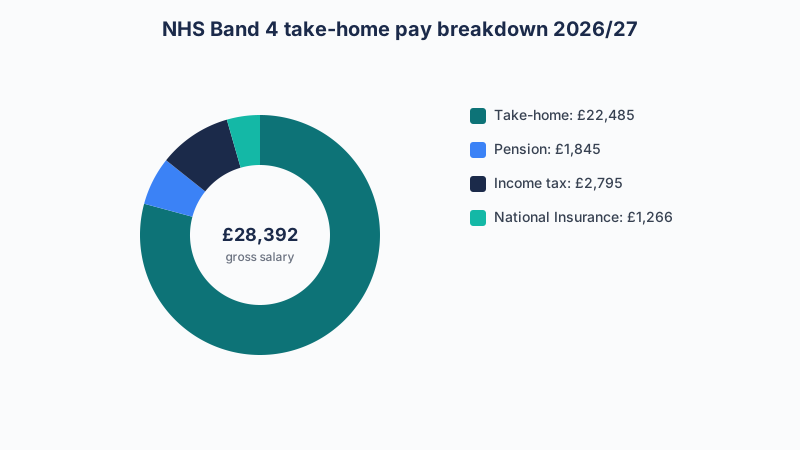
| Full-time | 37.5 | £28,392 | £1,845 (6.5%) | £4,061 | £1,874 |
| 0.6 WTE | 22.5 | £17,035 | £1,107 (6.5%) | £1,029 | £1,242 |
Net pay changes with pension membership (and the cliff-edge tier on whole pensionable pay), income tax and National Insurance, student loans, High Cost Area Supplement and contracted hours. A 0.6 WTE contract is not always 60 percent of full-time take-home, because personal allowance and tier thresholds do not scale the same way as gross pay. In Scotland the full-time week is 36 hours in 2026/27 (1,879.2 annualised hours), so hourly estimates and WTE hours differ from England even when the cash salary table looks similar. Use the NHS pay calculator for other nations, loans or HCAS.
Pension tier jump within Band 4
Band 4 is one of the bands where pension contributions change as you progress. The entry point at £28,392 sits in the 6.5% tier, while the top point at £31,157 sits in the 8.3% tier. Once you cross the threshold, the higher rate applies to whole pensionable pay, not only the slice above it, so modelled take-home rises more slowly than gross pay alone. Contributions are deducted before income tax, and the employer adds a further contribution on top. For tier thresholds see the NHS pension contribution calculator.
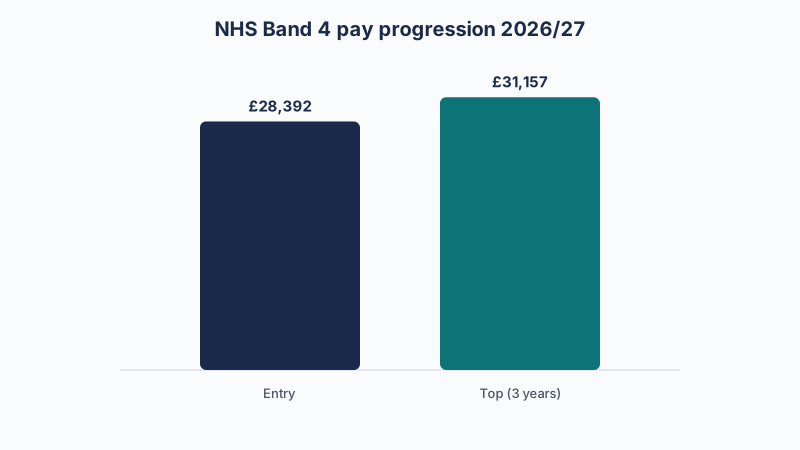
Progression from £28,392 to £31,157 follows Agenda for Change time-based rules and a satisfactory appraisal. After the top point, basic pay only rises through the national award or by moving to a higher band such as Band 5.
How Band 4 compares to Band 3 and Band 5
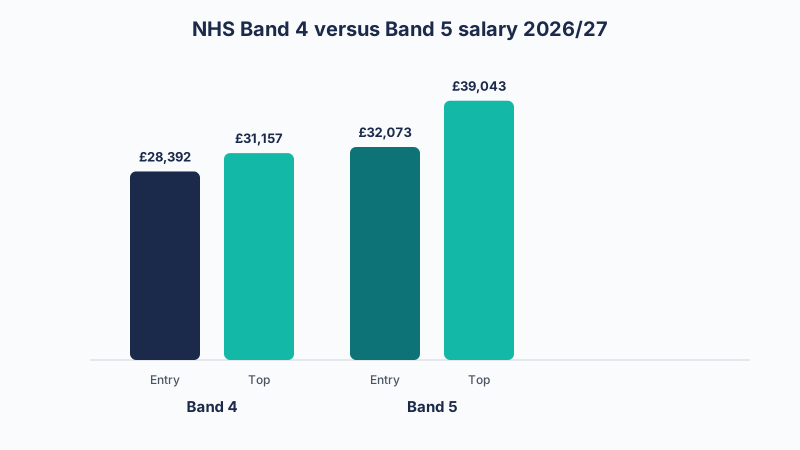
Band 3 runs from £25,760 to £27,476 and covers clinical support and senior assistant roles. Band 4 entry is £28,392, about £916 above the top of Band 3, and rises to £31,157. Band 4 roles such as nursing associates and assistant practitioners usually need more training and autonomy than Band 3 support roles.
Moving to Band 5 usually means gaining a professional registration and applying for a registered post. Band 5 entry is £32,073, about £916 above the top of Band 4, and rises to £39,043.
Hourly rate and four nations
The hourly rate is worked out by dividing the annual salary by 1,957.5, which is 52.2 weeks multiplied by 37.5 hours. In Scotland the standard week is 36 hours in 2026/27, so the hourly rate uses 1,879.2 annualised hours and is not a copy of the England figure. Wales and Northern Ireland follow closely related cash scales; Scotland has a separate deal and the shorter week above. Select your nation in the calculator for an exact figure.
Frequently asked questions
On the £28,392 England entry point, modelled take-home is about £1,874 a month after income tax, National Insurance and the 6.5% NHS pension. At the top of the band (£31,157) it is about £1,990 a month, where the pension tier is 8.3%. Those figures assume pension membership, a standard tax code, full-time hours, no student loan and no HCAS, they do not apply to every contract.
The England Band 4 entry salary for 2026/27 is £28,392 a year, including the 3.3 percent pay award from 1 April 2026. The top of the band is £31,157, reached after the Agenda for Change progression period if the appraisal requirements are met.
Band 4 crosses a pension tier threshold within the band. The entry point sits in the 6.5% tier, while the top point sits in the 8.3% tier. The higher rate then applies to whole pensionable pay, not only the amount above the threshold, which is why take-home can rise more slowly than gross pay alone suggests.
Band 3 runs from £25,760 to £27,476 and covers clinical support and senior assistant roles. Band 4 runs from £28,392 to £31,157 and covers nursing associates, assistant practitioners and similar roles that usually need more training and autonomy.
Band 4 has 2 pay points. Movement from £28,392 to £31,157 follows Agenda for Change time-based progression and a satisfactory appraisal, it is not an automatic award for every member of staff.
About £14.50 an hour at entry and about £15.92 an hour at the top of the band in England 2026/27. The hourly rate is worked out by dividing the annual salary by 1,957.5, which is 52.2 weeks multiplied by 37.5 hours. In Scotland the standard week is 36 hours in 2026/27, so the hourly rate uses 1,879.2 annualised hours and is not a copy of the England figure.
Band 4 roles include nursing associates, assistant practitioners, pharmacy technicians, bed managers, senior healthcare assistants, theatre support workers and senior administrative staff. The nursing associate role is a common stepping stone towards becoming a Band 5 registered nurse.
Moving to Band 5 usually means gaining a professional registration, such as qualifying as a registered nurse, and applying for a registered post. Band 5 entry is £32,073, about £916 above the top of Band 4, and rises to £39,043.
NHS pay bands · NHS take-home calculator · Pension contributions · Band 3 pay · Band 5 pay · Page updated 2026-09-10 (pay rates effective 1 April 2026).
Compare neighbouring NHS bands
Your NHS pension: how the 2015 CARE scheme works, contribution tiers, employer payments, and retirement options.
What you pay into your NHS pension: contribution tiers for 2025/26, tax relief, employer payments, and what your contributions build.
When you can take your NHS pension: normal pension age, early and late retirement, partial retirement, lump sum, and survivor benefits.
Agenda for Change explained: how NHS pay bands work, progression, London supplements, unsocial hours and annual leave.
Compare the band immediately below and above, or open the full pay scale for every Agenda for Change band.
Full NHS pay bands table for 2026/27 · NHS calculators and guides