
NHS pay bands 2026/27
NHS staff on Agenda for Change are paid on nine numbered bands, from Band 2 at £25,272 a year to Band 9 at up to £129,783 a year in 2026/27. Most clinical and support staff in England, Wales and Northern Ireland are paid this way, with each band covering a set of pay points and a defined group of roles. These are the confirmed 2026/27 rates, which include the 3.3 percent pay award that took effect on 1 April 2026 and was backdated to that date.
Calculate NHS take-home pay by band - choose nation, pay point, hours, pension and student loan on the NHS pay calculator.
Source: NHS Employers AfC pay scales. Source checked on .

NHS pay bands 2026/27 at a glance
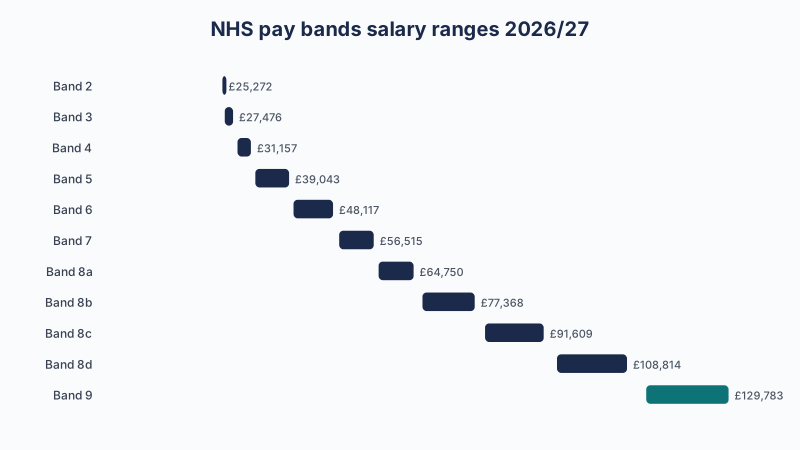
The table below shows the full Agenda for Change pay scale for England in 2026/27, from the entry salary to the top of each band, the hourly rate at the top point, the NHS pension contribution rate, and typical roles. Band 2 is a single rate with no progression. All other bands have two or three pay points.
| Band | Entry salary | Top of band | Top hourly | Pension tier | Typical roles |
|---|---|---|---|---|---|
| Band 2 | £25,272 | single rate | £12.91 | 6.5% | Healthcare assistant, porter, domestic, receptionist |
| Band 3 | £25,760 | £27,476 | £14.04 | 6.5% | Clinical support worker, therapy assistant, pharmacy assistant |
| Band 4 | £28,392 | £31,157 | £15.92 | 6.5% to 8.3% | Nursing associate, assistant practitioner, pharmacy technician |
| Band 5 | £32,073 | £39,043 | £19.95 | 8.3% to 9.8% | Newly qualified nurse, paramedic, physiotherapist, radiographer |
| Band 6 | £39,959 | £48,117 | £24.58 | 9.8% | Specialist nurse, senior physiotherapist, deputy ward manager |
| Band 7 | £49,387 | £56,515 | £28.87 | 9.8% to 10.7% | Advanced nurse practitioner, ward manager, team leader |
| Band 8a | £57,528 | £64,750 | £33.08 | 10.7% | Advanced practitioner, lead pharmacist, principal psychologist |
| Band 8b | £66,582 | £77,368 | £39.52 | 10.7% to 12.5% | Head of service, consultant clinical scientist |
| Band 8c | £79,504 | £91,609 | £46.80 | 12.5% | Divisional director, head of clinical service |
| Band 8d | £94,356 | £108,814 | £55.59 | 12.5% | Director of clinical services, deputy chief nurse |
| Band 9 | £112,782 | £129,783 | £66.30 | 12.5% | Chief nurse, director of estates, executive director |
How does NHS pay progression work?
Within each band you move up the pay points over time, not on performance. Most steps are reached after two or three years of service, subject to a satisfactory appraisal, so a three-point band such as Band 5 takes about four to five years to reach the top. Once you are at the top of your band, your pay only rises through the annual national pay award, unless you move to a higher band. Progression through the points is the same for everyone and cannot be sped up for strong performance, because Agenda for Change progression is time-based by design.
Is there automatic progression between Band 8a, 8b, 8c and 8d?
No. The four Band 8 sub-bands, 8a, 8b, 8c and 8d, are each treated as a separate job level, so there is no automatic progression between them. Moving up means applying for and winning a more senior post, not progressing on time served. You do still move up the pay points within each sub-band automatically over time. This is the single most misunderstood part of the senior NHS pay structure, because people assume 8a leads to 8b in the way Band 5 points lead to the top of Band 5, when in fact each is a distinct job.
How are NHS jobs assigned to a band?
NHS jobs are matched to a band using the NHS Job Evaluation Scheme, which scores each role against 16 factors such as knowledge, responsibility, physical effort, and emotional demands. The total score places the job in a band, which is why two very different roles, such as a biomedical scientist and a staff nurse, can both sit at Band 5. Banding reflects the demands of the role, not the individual person doing it, so gaining experience does not change your band: moving up means moving into a higher-banded job.
How NHS pension tiers interact with the bands
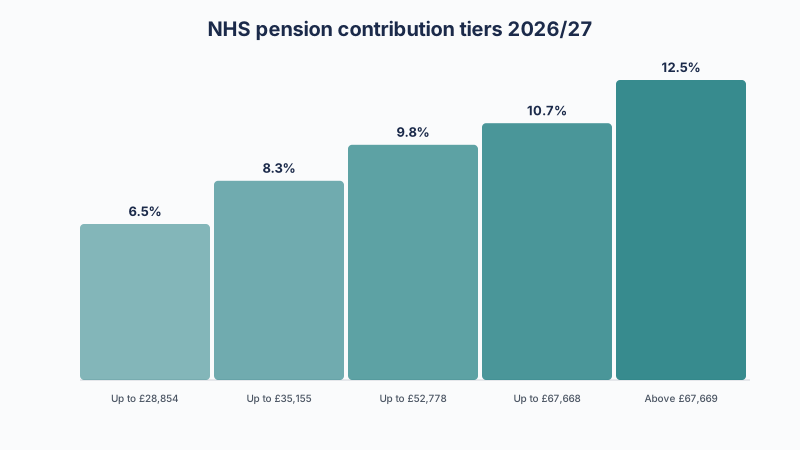
Your NHS pension contribution depends on your pensionable pay, not directly on your band, and the rate steps up through tiers as pay rises. In 2026/27 the main tiers in England and Wales are 6.5 percent up to £28,854, 8.3 percent to £35,155, 9.8 percent to £52,778, 10.7 percent to £67,668, and 12.5 percent above that. Because of this, some bands sit entirely within one tier, such as Band 6 at 9.8 percent, while others cross a tier as you progress, such as Band 5, where the top point moves you from 8.3 percent to 9.8 percent, and Band 7, where the top moves you from 9.8 percent to 10.7 percent. When you cross a tier, the higher rate applies to your whole salary, which is why take-home sometimes rises more slowly than the headline pay rise. Read our NHS pension contributions explained guide for member tiers, tax relief and what you pay, or our NHS pension scheme explained guide for how the 2015 CARE scheme and retirement options work. See when you can take your NHS pension for normal pension age, partial retirement and lump sum options. Contributions are taken before income tax, so you receive tax relief, and your employer adds 23.7 percent on top.
Which NHS band pays 40 percent income tax?
The 40 percent higher rate of income tax starts at £50,270, which falls within Band 7. A new Band 7 employee on £49,387 pays only basic rate tax, but as they progress towards the £56,515 top of the band, the part of their salary above £50,270 is taxed at 40 percent. Bands 8a and above sit entirely in the higher rate band, and at the very top, Band 8d and Band 9 earners begin to lose their tax-free personal allowance, which is reduced once income passes £100,000 and disappears entirely by £125,140. Band 9 at the top also reaches the 45 percent additional rate, which starts at £125,140.
The senior bands: 8b, 8c, 8d and 9
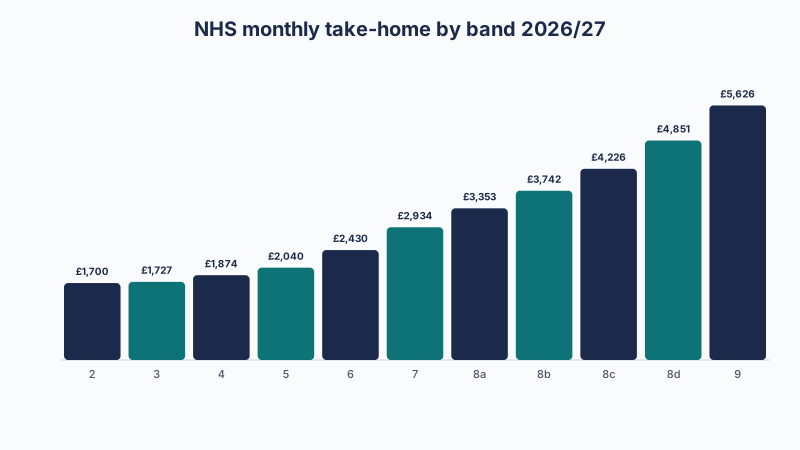
The most senior Agenda for Change bands cover directors, heads of service and executive-level roles. Band 8b, £66,582 to £77,368, covers heads of service, consultant clinical scientists and senior managers, and is where pay crosses into the 12.5 percent pension tier. Band 8c, £79,504 to £91,609, covers divisional directors and heads of clinical service. Band 8d, £94,356 to £108,814, covers directors of clinical services and deputy chief nurses, and is where the personal allowance taper begins to bite. Band 9, £112,782 to £129,783, is the top of the Agenda for Change structure and covers chief nurses, directors of estates and other very senior managers. Roles above Band 9, such as chief executives and medical directors, are paid under separate very senior manager arrangements rather than Agenda for Change.
NHS pay bands across the four nations
The numbered band structure is used across England, Scotland, Wales and Northern Ireland, but the figures differ. England, Wales and Northern Ireland follow the same Pay Review Body award, so their 2026/27 cash scales are close, with Wales and Northern Ireland matching or sitting very near the England figures. Scotland negotiates separately, has agreed a higher multi-year deal, and uses a 36-hour standard week rather than 37.5 hours, so both annual salaries and hourly rates differ, particularly at the lower bands where Scotland pays noticeably more. To compare your exact pay across nations, use the NHS pay calculator and select your country.
Explore each NHS band in detail
For a full breakdown of salary, take-home pay, hourly rate, pension and progression for each band, open the individual guides below. For how the band structure fits together, read our Agenda for Change explained guide.
All NHS band salary and take-home guides
- NHS Band 2 salary and take-home pay
- NHS Band 3 salary and take-home pay
- NHS Band 4 salary and take-home pay
- NHS Band 5 salary and take-home pay
- NHS Band 6 salary and take-home pay
- NHS Band 7 salary and take-home pay
- NHS Band 8a salary and take-home pay
- NHS Band 8b salary and take-home pay
- NHS Band 8c salary and take-home pay
- NHS Band 8d salary and take-home pay
- NHS Band 9 salary and take-home pay
NHS calculators
Use these tools alongside the band guides to model your own pay, pension and leave.
See the NHS pay, pension and leave hub or the full NHS pay bands table for 2026/27.
Frequently asked questions
The NHS uses nine numbered Agenda for Change bands in 2026/27, running from Band 2 at £25,272 to Band 9 at up to £129,783 in England. Band 8 is split into four sub-bands, 8a to 8d. The figures include the 3.3 percent pay award that took effect on 1 April 2026.
In England in 2026/27, Band 2 pays £25,272, Band 3 £25,760 to £27,476, Band 4 £28,392 to £31,157, Band 5 £32,073 to £39,043, Band 6 £39,959 to £48,117, Band 7 £49,387 to £56,515, and Band 8a £57,528 to £64,750. The senior bands run up to £129,783 at the top of Band 9.
You move up the pay points within your band over time, typically after two or three years per step with a satisfactory appraisal, not based on performance. Once at the top of your band, pay only rises through the annual national award or by moving to a higher band.
No. Each Band 8 sub-band is a separate job level, so moving from 8a to 8b, 8c or 8d means applying for a more senior post. You do move up the pay points within each sub-band automatically over time.
Jobs are matched to a band using the NHS Job Evaluation Scheme, which scores a role against 16 factors such as knowledge, responsibility and physical and emotional demands. The score sets the band, and banding reflects the role rather than the person doing it.
The 2026/27 pay award of 3.3 percent took effect on 1 April 2026 and was backdated to that date for staff in England. The figures on this page already include it.
The band structure is used across all four nations, but the figures differ. England, Wales and Northern Ireland are close because they follow the same Pay Review Body award, while Scotland has a separate, higher deal and a 36-hour week, so its salaries and hourly rates differ.
The 40 percent higher rate starts at £50,270, which falls inside Band 7, so the upper part of Band 7 and all of Bands 8a and above are taxed at 40 percent on the portion above the threshold. Band 9 reaches the 45 percent additional rate at £125,140.